

If you want to build an Amazon business, one of the most important questions is simple: how do you find products to sell on Amazon without guessing?
A product can look popular, trendy, or exciting at first, but that does not automatically make it a good Amazon product. Before you buy inventory, you need to check demand, competition, profit potential, Amazon fees, shipping difficulty, restrictions, and whether the product is actually suitable for your selling model.
This guide explains how to find products to sell on Amazon in 2026 using Amazon’s own tools, free research methods, customer reviews, search suggestions, trend data, and simple product filters. The goal is not to give you a random list of “winning products.” The goal is to help you find product ideas and decide which ones deserve deeper research.
If you are still learning the full Amazon FBA process, start with our complete guide on how to sell on Amazon FBA. If you have not opened your account yet, you can also read our guide on how to create an Amazon seller account before moving deeper into product selection.
Quick Answer: How Do You Find Products to Sell on Amazon?
To find products to sell on Amazon, start by looking for product ideas using Amazon search suggestions, Amazon Best Sellers, category pages, customer reviews, Google Trends, competitor listings, and Amazon tools such as Product Opportunity Explorer. Then filter those ideas by demand, competition, profitability, shipping cost, FBA suitability, restrictions, and supplier availability before buying inventory.
The most important point is this: finding a product idea is not the same as finding a product worth selling. A product idea only becomes interesting after it passes basic checks for demand, margin, competition, fulfillment cost, and risk.
For beginners, the safest approach is to start with simple products that are easier to ship, easier to store, not fragile, not heavily restricted, and not dominated by powerful brands. Once you find a promising idea, you should validate it more deeply before ordering samples or inventory.
If you are learning how to find products to sell on Amazon for the first time, focus on building a repeatable process instead of chasing random product ideas.
Best Ways to Find Products to Sell on Amazon at a Glance
There is no single best way to find products to sell on Amazon. A stronger approach is to collect ideas from several sources, then validate the best ones before buying inventory. Use the table below as a quick map before going deeper into each method.
| Method | Best For | Next Step |
|---|---|---|
| Amazon search suggestions | Finding real phrases shoppers type into Amazon search. | Turn suggestions into product ideas, then check demand, reviews, price, and competition. |
| Amazon Best Sellers and categories | Spotting products and subcategories where buying activity already exists. | Look deeper than the top products and search for smaller angles, accessories, or weaker listings. |
| Customer reviews | Finding complaints, missing features, weak packaging, confusing instructions, or improvement ideas. | Use repeated complaints to decide whether you can create a better offer. |
| Amazon Product Opportunity Explorer | Comparing niches using Amazon marketplace data inside Seller Central. | Read the full Amazon Product Opportunity Explorer guide. |
| Helium 10 Black Box | Filtering product ideas by category, price, reviews, sales estimates, and other research criteria. | Read the full Helium 10 Black Box guide. |
| Helium 10 Chrome Extension | Checking products directly from Amazon search results and product pages. | Read the full Helium 10 Chrome Extension guide. |
| Full product validation | Deciding whether a product idea is actually worth sourcing, sampling, and launching. | Use the full Amazon FBA product research process before buying inventory. |
What Makes a Good Product to Sell on Amazon?
Before you start searching for product ideas, you need to know what a good product looks like. Otherwise, you may collect dozens of ideas without knowing which ones are actually worth your time.
A good Amazon product usually has enough demand, manageable competition, healthy profit potential, simple logistics, and a clear reason for customers to choose it over similar products.
Demand
Demand means people are already looking for the product or buying similar products. You can spot demand through Amazon Best Sellers, Best Sellers Rank, keyword suggestions, Product Opportunity Explorer, product reviews, and sales estimates from research tools.
Demand alone is not enough. A product can have strong demand and still be a poor opportunity if the market is too competitive or the margins are too thin.
Competition
Competition tells you how hard it may be to enter the market. Look at review counts, listing quality, brand strength, number of sellers, price pressure, sponsored ads, and whether large brands dominate the first page.
For beginners, a market with demand and some weak competitors is usually more realistic than a market where every top listing has thousands of reviews and polished branding.
Profitability
A product is only useful if it can leave enough profit after product cost, shipping, Amazon referral fees, FBA fulfillment fees, storage, PPC, returns, damaged units, and other costs.
This is where many beginners make mistakes. They compare the selling price to the supplier price and assume the difference is profit. That is not enough. You need to understand the full cost picture before buying inventory.
Size, Weight, and Shipping
Small and lightweight products are usually easier for beginners because they are cheaper to ship, store, and fulfill. Heavy, bulky, fragile, or oversized products can create higher shipping costs, higher FBA fees, more storage risk, and more return problems.
Seasonality and Shelf Life
Some products sell strongly during a short season and slow down afterward. Seasonal products can work for experienced sellers, but they are risky for beginners because timing, inventory planning, and cash flow become harder.
Products with a long shelf life and steadier demand are usually easier to manage for a first Amazon product.
Restrictions and Legal Risk
Some products or categories may require approval, compliance documents, safety certifications, or brand authorization. Others may carry intellectual property, trademark, or product liability risks.
Before buying inventory, check whether the product is restricted, gated, risky, or difficult to sell from your account. A profitable-looking product is not useful if you cannot list it or send it to FBA.
Differentiation Potential
You do not need to invent something completely new, but your product should have a reason to exist. Differentiation can come from better materials, improved packaging, clearer instructions, better photos, useful accessories, stronger branding, or fixing common complaints in competitor reviews.
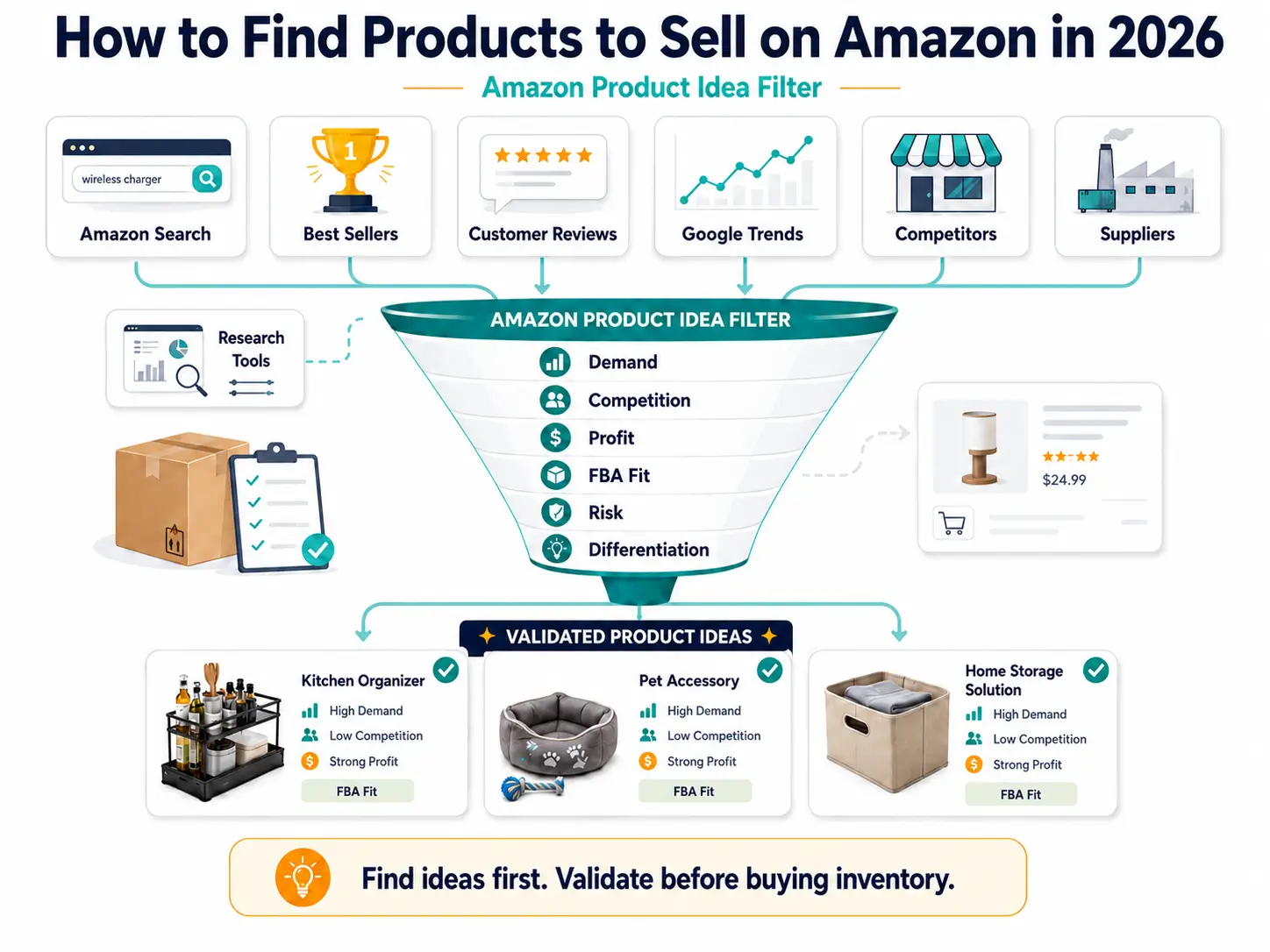
| Product filter | What to check | Why it matters |
|---|---|---|
| Demand | Search suggestions, Best Sellers, BSR, sales signals, and customer interest. | Confirms that people already want this type of product. |
| Competition | Review counts, listing quality, brands, ads, and number of sellers. | Shows whether a new seller has a realistic chance to enter. |
| Profit | Product cost, shipping, Amazon fees, PPC, returns, and margin. | Prevents you from choosing products that sell but do not leave profit. |
| FBA fit | Size, weight, prep needs, storage risk, and fulfillment fees. | Helps avoid products that become expensive inside FBA. |
| Risk | Restrictions, product safety, IP issues, and return risk. | Protects you from products that can delay or damage your launch. |
| Differentiation | Customer complaints, weak listings, packaging gaps, and missing features. | Gives your version of the product a reason to exist. |
Use this as a first-pass filter. A product idea does not need to be perfect, but it should not fail several of these checks before you research it more deeply.
How to Find Product Ideas on Amazon
Amazon itself is one of the best places to start looking for product ideas. You can learn a lot by studying how shoppers search, which products appear in categories, what customers complain about, and which products are commonly purchased together.
The goal at this stage is not to choose a final product. The goal is to collect ideas worth investigating.
Use Amazon Search Suggestions
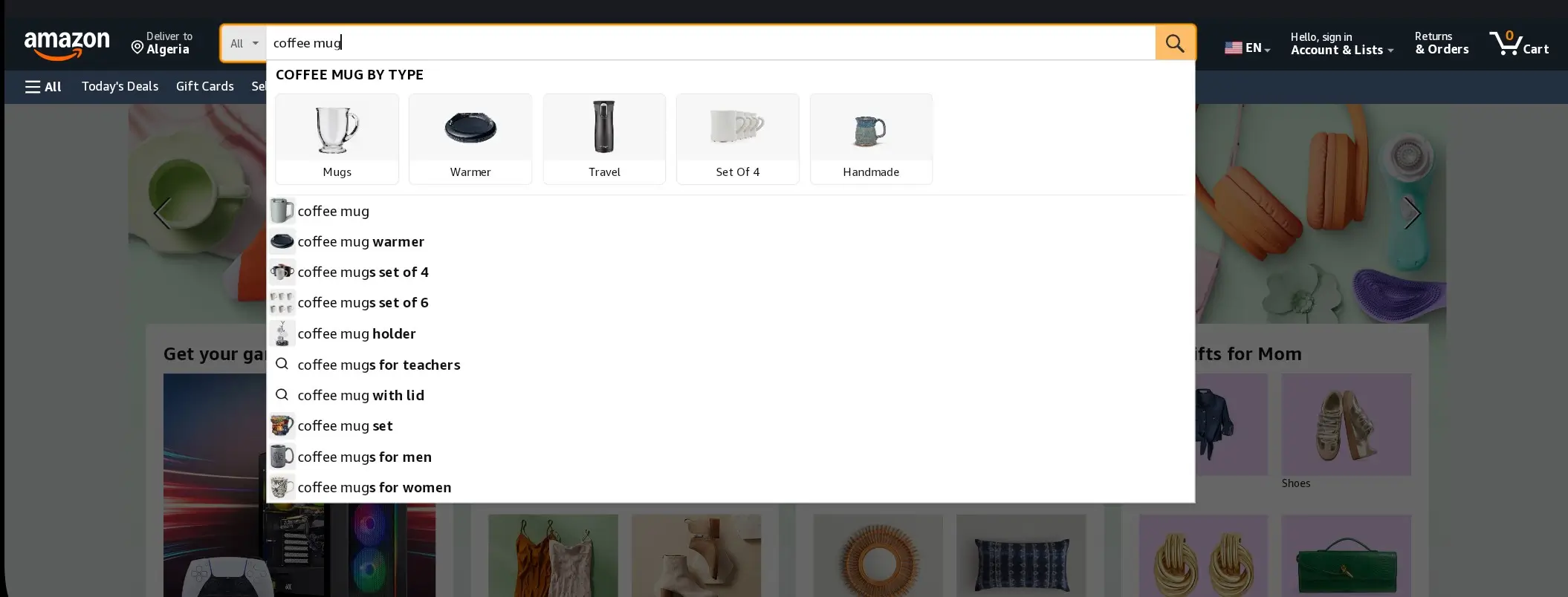
Amazon search suggestions can give you product ideas based on what shoppers are typing into the search bar. Start with a broad product or category, then look at the suggested phrases that appear.
For example, if you type “coffee mug,” Amazon may suggest ideas such as coffee mug warmer, coffee mugs set of 4, coffee mug with lid, coffee mugs for teachers, or coffee mugs for men and women. Each suggestion can reveal a different angle.
- Feature-based idea: coffee mug with lid
- Accessory idea: coffee mug warmer
- Audience-based idea: coffee mugs for teachers
- Bundle idea: coffee mugs set of 4
Search suggestions are useful because they show how customers think. But do not treat every suggestion as a product opportunity. Use them to collect ideas, then validate demand, competition, margin, and risk.
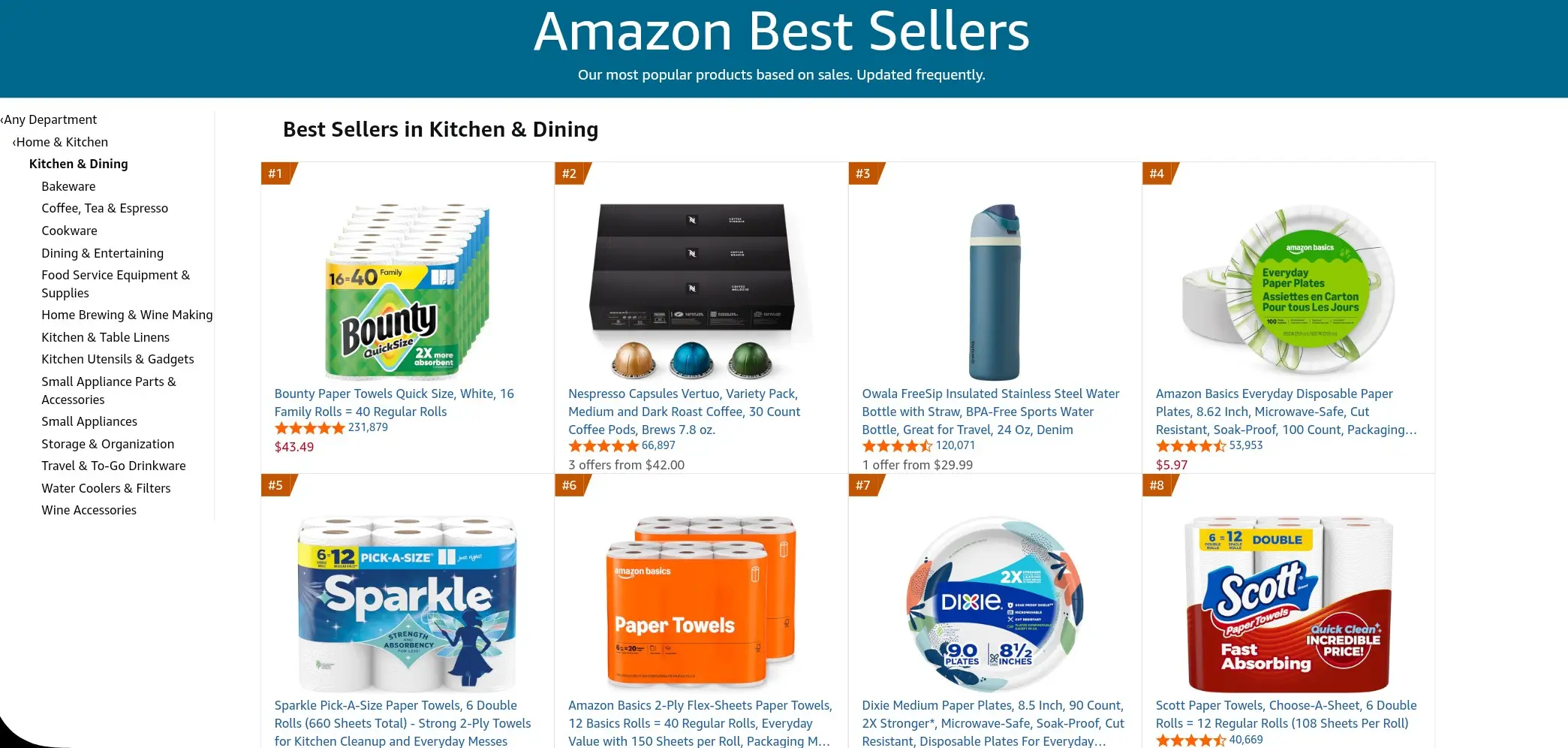
Browse Amazon Categories and Subcategories
Amazon categories can help you see how products are organized and where shoppers browse. Start with broad categories, then move into subcategories to find more specific product ideas.
For example, instead of looking only at Home & Kitchen, you might move into Kitchen & Dining, then Coffee, Tea & Espresso, then accessories such as filters, cleaning tools, travel mugs, storage items, or replacement parts.
This matters because broad categories are usually too competitive. Subcategories can reveal narrower product angles that are easier to understand and compare.
Study Related Products and Frequently Bought Together
Product pages can also lead you to related ideas. Look at related products, frequently bought together items, and accessories around a product. Sometimes the best beginner idea is not the main product, but an accessory that solves a smaller problem.
For example, instead of selling a crowded product like a coffee maker, you might find ideas around filters, cleaning tablets, replacement parts, storage containers, travel accessories, or organization products.
This accessory angle can be useful because accessories are often smaller, lighter, cheaper to ship, and easier to differentiate than the main product category.
Read Customer Reviews for Product Gaps
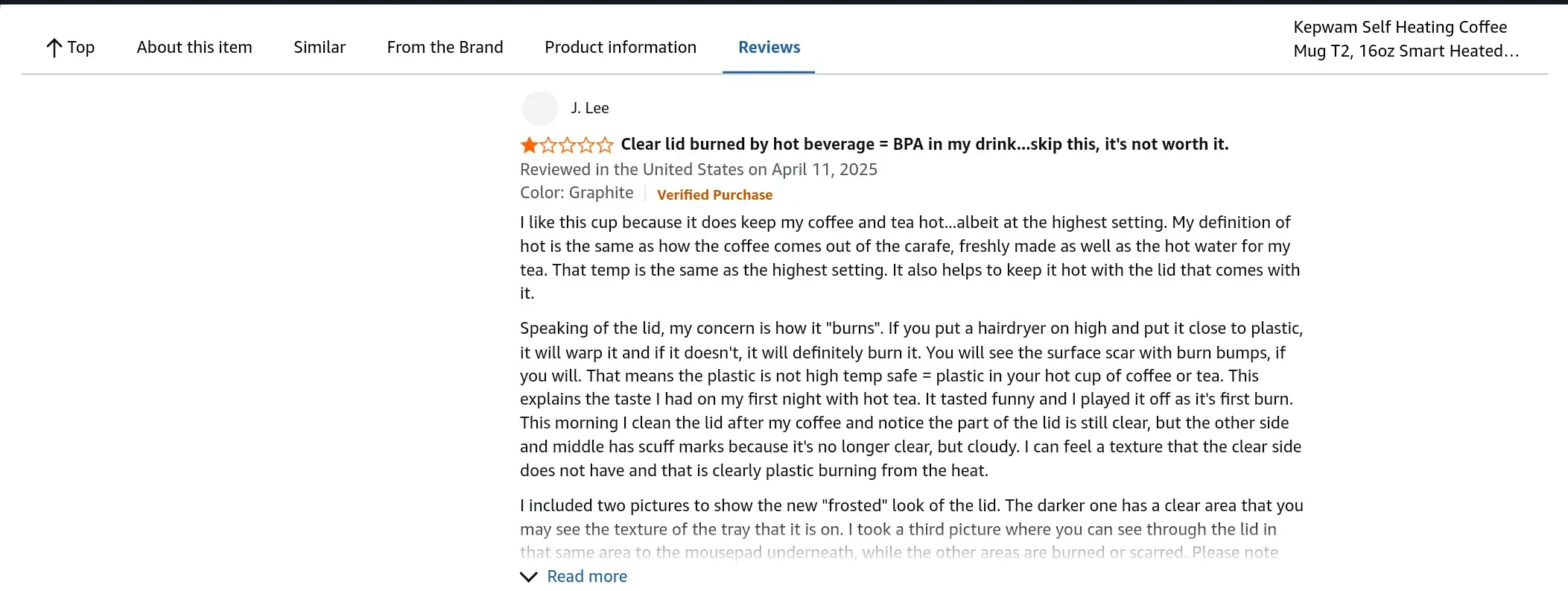
Customer reviews are one of the best free product research sources on Amazon. Reviews show what customers like, what they dislike, and what they wish were different.
Do not only read 1-star reviews. They can be useful, but they are sometimes emotional or extreme. Reviews with 2 or 3 stars often reveal more balanced problems, such as “good idea, but poor quality,” “works well, but too small,” or “nice product, but the lid leaks.”
If the same complaint appears again and again, that may be a product improvement opportunity. You might improve the material, packaging, size, instructions, accessory bundle, or product images so customers understand the product better before buying.
Use Amazon’s Own Tools to Find Product Ideas
Amazon provides several useful places to discover product ideas and understand demand. These tools do not replace deeper validation, but they can help you find ideas based on real shopping behavior inside Amazon’s marketplace.
Amazon Best Sellers
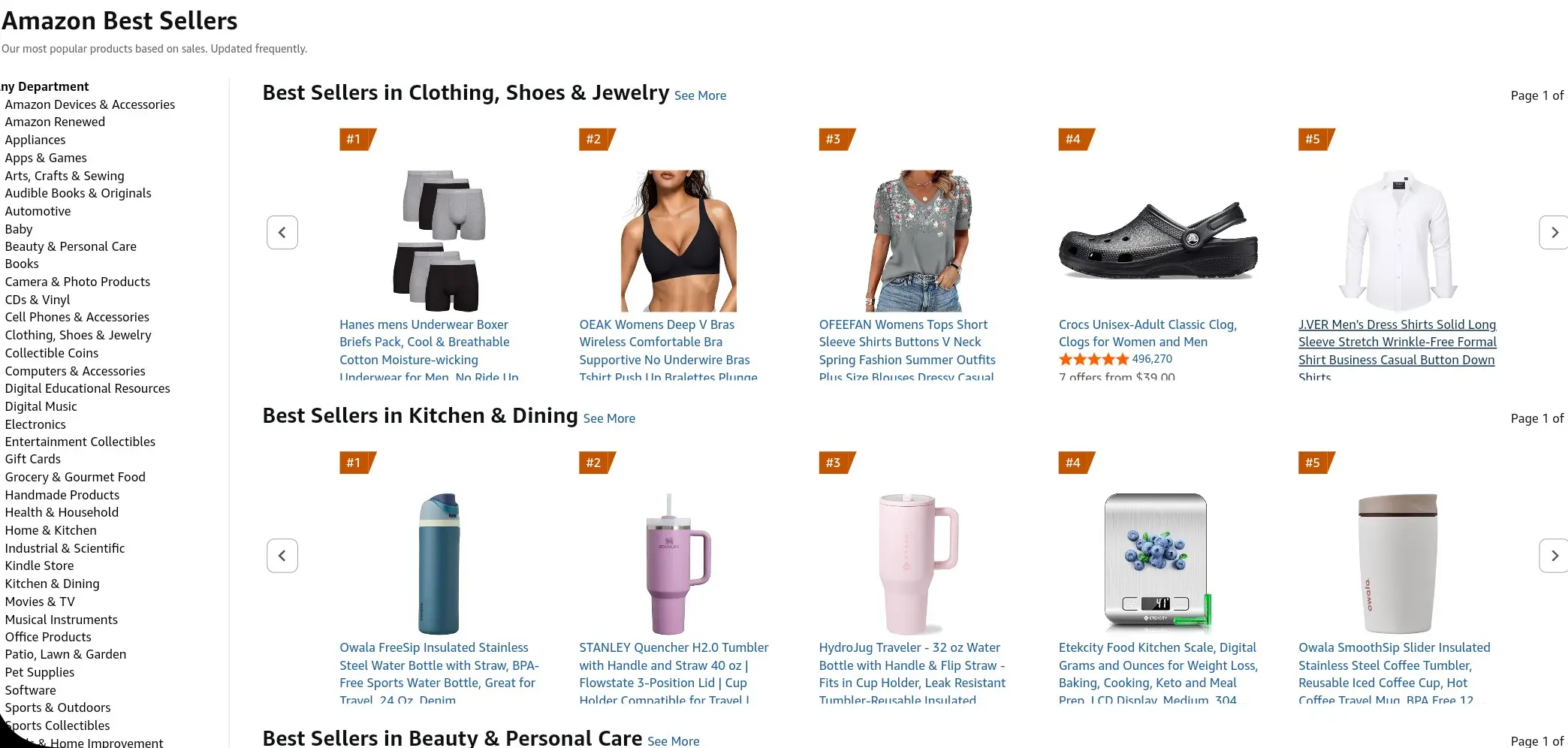
Amazon Best Sellers lists show popular products across different categories. They are useful because they show where buying activity already exists.
However, best-selling products are not always beginner-friendly. A product at the top of a category may have strong demand, but it may also have high competition, thousands of reviews, strong brands, aggressive pricing, or low margins.
Use Best Sellers to understand demand and collect ideas, not to copy the first product you see.
Best Sellers Rank
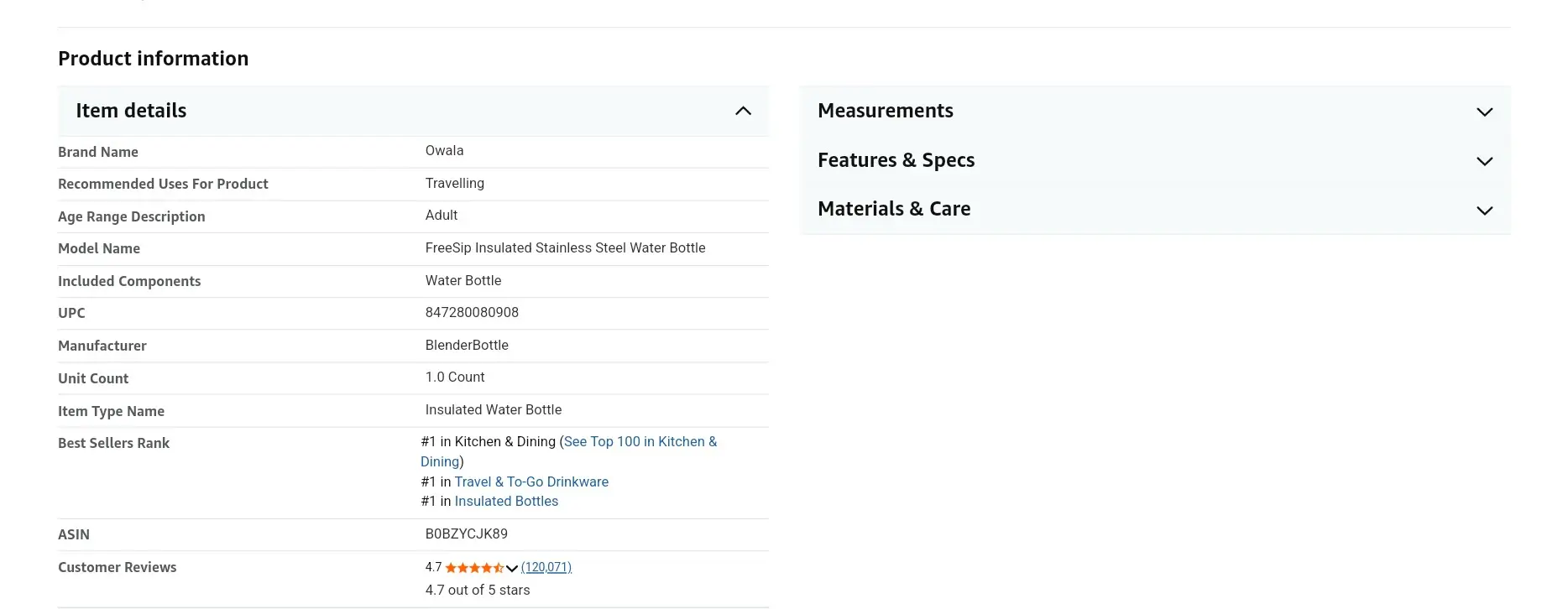
Best Sellers Rank, or BSR, is another useful signal. You can often find it in the Product Information or Product Details section of a listing.
A strong BSR can suggest that a product sells consistently in its category. But BSR should not be used alone. It can vary by category, change over time, and say nothing by itself about profit margin, competition, PPC cost, or sourcing difficulty.
Use BSR as one signal of demand, then compare it with reviews, price, product cost, shipping, fees, and differentiation potential.
Movers & Shakers and Hot New Releases
Amazon Movers & Shakers can help you spot products rising quickly in sales rank. Hot New Releases can show newer products gaining traction.
These pages are useful for trend discovery, but they can also be risky. A product that rises quickly may also fade quickly. Use these lists to collect ideas, then check whether demand is stable, whether the product is seasonal, and whether the market is already crowded.
Product Opportunity Explorer
Product Opportunity Explorer is helpful, but it still does not make the decision for you. You still need to check product cost, Amazon fees, shipping, competition, supplier options, and whether you can create a better offer. For a deeper walkthrough, read our full guide on how to use Amazon Product Opportunity Explorer.
Instead of only looking at individual products, you can use it to explore niches, search volume, search growth, average price, clicked products, customer reviews, and other signals that help you understand whether a market may be worth deeper research.
This can help you move from guessing to comparing real opportunities. For example, if a niche has growing search volume, a reasonable average price, and products with weaknesses in reviews or ratings, it may deserve further validation.
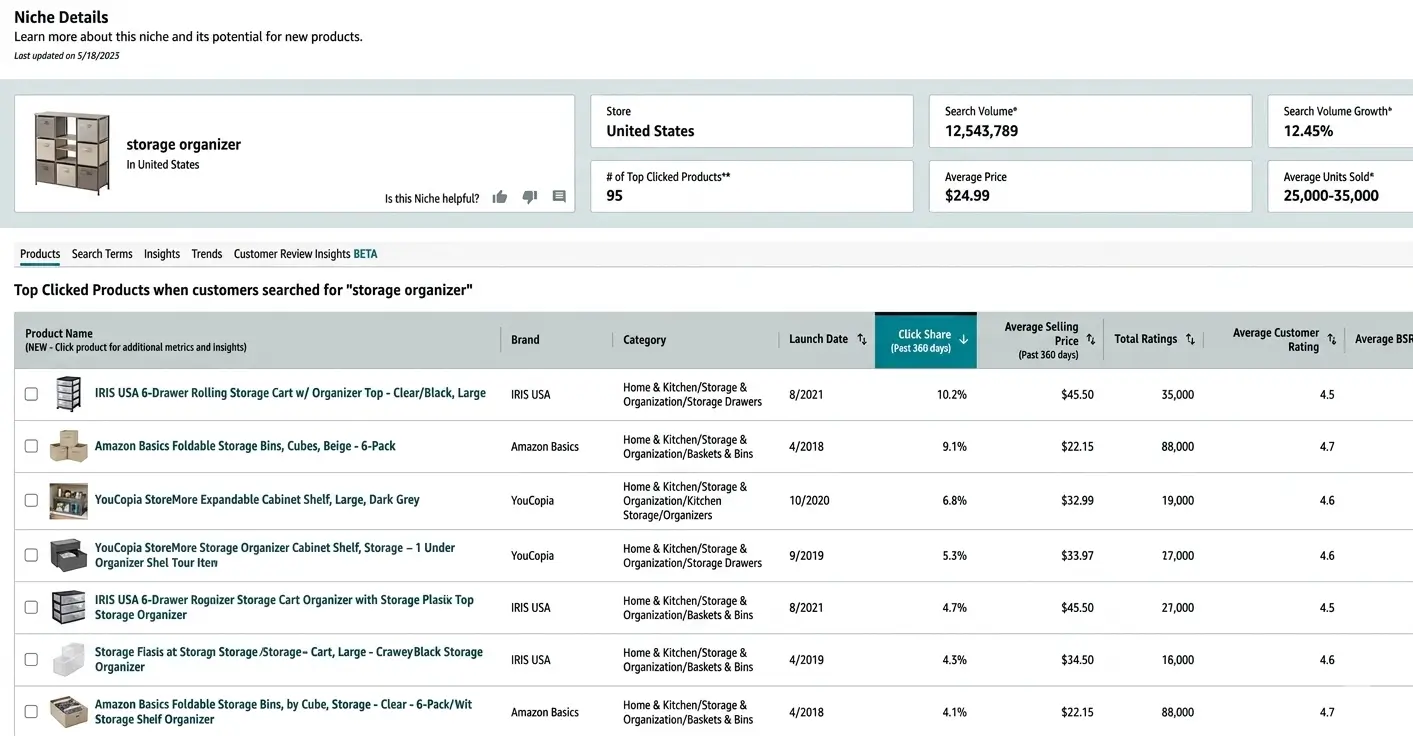
Product Opportunity Explorer is helpful, but it still does not make the decision for you. You still need to check product cost, Amazon fees, shipping, competition, supplier options, and whether you can create a better offer.
How to Find Best-Selling Products on Amazon
To find best-selling products on Amazon, start with Amazon Best Sellers, browse into specific categories, review the top products, and look for patterns. Pay attention to product types that appear repeatedly, products with strong sales signals, and subcategories where several listings perform well instead of one seller dominating everything.
Do not focus only on the #1 product. The top product in a category is often too competitive for a beginner. Instead, look deeper into the category and ask better questions:
- Are several products selling well, or is one brand controlling the category?
- Do some products have demand but weak images or unclear listings?
- Are customers repeating the same complaints in reviews?
- Is the product small and simple enough for a beginner to source and ship?
- Can you improve the offer without making the product too complicated?
The best-selling product is not always the best product for you. Best-selling proves demand, but it can also prove competition. Use best-selling products as starting points, then look for gaps, accessories, sub-niches, and problems you can solve.
How to Find Products to Sell on Amazon for Free
You do not need to pay for software just to start collecting product ideas. Free methods are enough to build an initial list, understand customer behavior, and spot product angles worth researching further.
Free Methods Inside Amazon
Inside Amazon, you can use several free sources:
- Amazon search autocomplete
- Amazon Best Sellers
- category and subcategory pages
- related products
- frequently bought together sections
- customer reviews
- product details and Best Sellers Rank
These methods help you find ideas and understand what shoppers are buying or searching for. The limitation is that they do not automatically calculate profit, fees, shipping cost, or competition difficulty.
Paid product research tools can speed up this process once you are ready for deeper research. For example, Helium 10 Black Box can help you filter product ideas by category, price, reviews, sales estimates, and other research criteria, while the Helium 10 Chrome Extension can help you check products directly from Amazon search results and product pages.
Other tools such as Jungle Scout Product Database, AMZScout Product Database, and Seller Assistant can also help with product filtering, competition checks, profitability estimates, restrictions, or supplier data. These tools can save time, but they should not replace your judgment. Use them to build a shortlist, then manually check demand, reviews, fees, shipping, restrictions, and whether you can create a better offer before buying inventory.
Free Methods Outside Amazon
You can also find product ideas outside Amazon. Google Trends, Reddit, forums, TikTok, YouTube comments, niche communities, and competitor websites can reveal what people are talking about, complaining about, or buying.
Be careful with social trends. By the time a product goes viral, many sellers may already be sourcing it. Social media can help you discover problems and trends, but you still need to validate demand and competition on Amazon before buying inventory.
Use Google Trends to Check Demand Direction
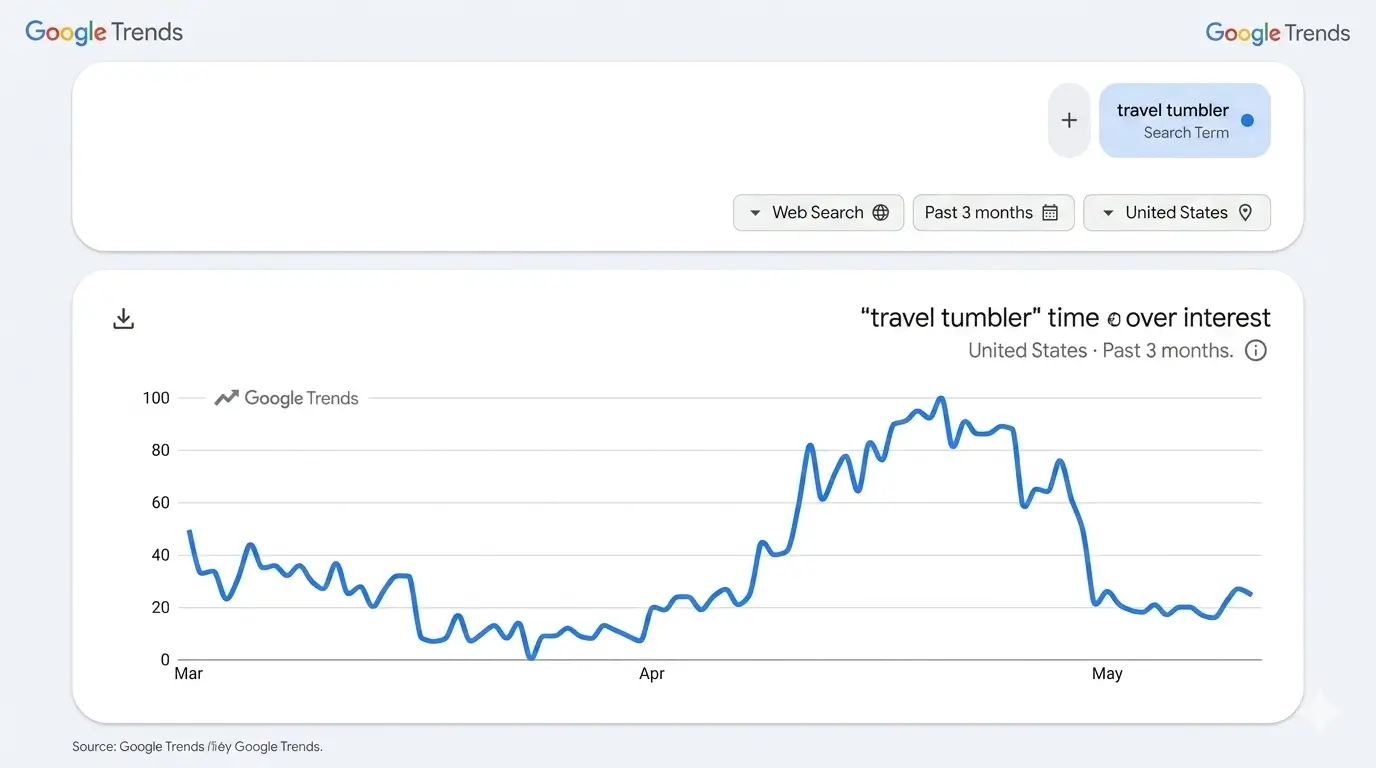
Google Trends can help you see whether interest in a product idea is rising, falling, seasonal, or unstable. This is especially useful before you commit to inventory.
For example, if a product shows a sudden spike and then drops quickly, it may be a short-term trend rather than a stable opportunity. If interest rises at the same time every year, it may be seasonal. If interest stays steady over time, it may be easier to plan around.
Once you have a list of product ideas, the next filter is whether those ideas actually fit the Amazon FBA model.
How to Find Products to Sell on Amazon FBA
Finding products to sell on Amazon FBA is different from finding any product with demand. FBA adds extra considerations, including fulfillment fees, storage fees, size tiers, shipping weight, prep requirements, returns, and inventory planning.
A product may look good on Amazon, but still be a poor FBA product if it is heavy, fragile, oversized, hard to package, slow-moving, or likely to be returned often.
For beginners, FBA-friendly products usually have these traits:
- small or standard-size
- lightweight
- simple to package
- not fragile
- not perishable
- not heavily restricted
- easy to explain in a listing
- enough selling price to survive fees and PPC
- available from more than one supplier
Before choosing a product for FBA, check the major cost layers. Amazon fees, storage, inbound shipping, PPC, and returns can reduce your margin quickly. You can read our full guide to Amazon FBA fees if you want a beginner-friendly breakdown of the main fee layers.
If you are still estimating your launch budget, use our Amazon FBA cost calculator before buying inventory.
How to Find Profitable Products to Sell on Amazon
To find profitable products to sell on Amazon, you need to look beyond sales volume. A product can sell well and still be a bad opportunity if fees, shipping, advertising, returns, and competition remove the margin.
Estimate Landed Cost
Your product cost is not your real cost. The number that matters is landed cost, which can include product cost, shipping, packaging, prep, inspection, duties, and any cost needed to make the product ready to sell.
If a product only looks profitable before shipping and prep are included, it may not be a real opportunity.
Include Amazon Fees, PPC, and Returns
When estimating profit, include Amazon referral fees, FBA fulfillment fees, storage, PPC testing, returns, damaged units, and price competition.
This is why beginners should not judge products only by selling price and supplier cost. The real question is whether the product still makes sense after all major costs are included.
For a deeper launch budget breakdown, read our guide on how much it costs to start Amazon FBA.
Use a Quick Profit Filter
Before you spend time contacting suppliers, run each idea through a simple profit filter.
| Profit factor | Question to ask |
|---|---|
| Selling price | Is the price high enough to support fees, PPC, shipping, and margin? |
| Product cost | Can you source the product affordably without sacrificing quality? |
| Shipping | Is the product small and light enough to ship without hurting margin? |
| Amazon fees | Does the product still work after referral fees and FBA fulfillment fees? |
| PPC | Can the product survive paid ad testing during launch? |
| Returns | Is the product likely to have sizing, quality, damage, or expectation issues? |
| Buffer | Is there enough room for mistakes, delays, and unexpected costs? |
If a product fails several of these questions, it is probably not ready for deeper research. Move on or adjust the idea before spending money.
Where Can You Source Products to Sell on Amazon?
Finding a product idea is one part of the process. You also need to know where the product could come from. Different sourcing models have different risks, costs, and levels of control.
Private Label and Manufacturers
Private label means working with a manufacturer to sell a product under your own brand. This can offer more control and long-term brand potential, but it usually requires samples, customization, packaging, inventory, and more upfront planning.
This is often the model many Amazon FBA beginners think about, but it is not the only way to sell.
Wholesale Suppliers
Wholesale means buying existing branded products from suppliers, distributors, or brands and reselling them on Amazon. This can work well for sellers who can get approval and find products with enough margin.
The challenge is that wholesale often involves brand restrictions, supplier approval, lower differentiation, and competition with other sellers on the same listing.
Retail or Online Arbitrage
Retail arbitrage and online arbitrage involve buying discounted products from retail stores or online retailers and reselling them on Amazon. This can help beginners learn how pricing, fees, and demand work, but it can be time-consuming and may not scale like a private label brand.
Print on Demand and Dropshipping
Print on demand and dropshipping can reduce upfront inventory costs, but they come with trade-offs. You may have less control over production, shipping time, quality, branding, and customer experience.
If you use dropshipping, make sure you understand Amazon’s policies. Do not assume every dropshipping method you see online is allowed on Amazon.
Alibaba and Supplier-First Research
Some sellers start by browsing supplier platforms like Alibaba to see what manufacturers are already producing. This can help you find product ideas and compare costs.
However, supplier-first research can be risky if you do not return to Amazon to validate demand, competition, reviews, shipping costs, and profit. A product being available from a supplier does not mean it will sell profitably on Amazon.
Product Ideas vs Amazon FBA Product Research
One of the biggest beginner mistakes is confusing a product idea with a researched product. Finding product ideas is the first step. Amazon FBA product research is the deeper validation process that helps you decide whether an idea is actually worth sampling, sourcing, and launching.
This is why learning how to find products to sell on Amazon should not stop at collecting ideas. Before you contact suppliers or buy inventory, you need to check demand, competition, reviews, profit potential, FBA fees, restrictions, supplier options, and whether you can create a better offer.
A product idea is just a possibility. It may come from Amazon autocomplete, Best Sellers, customer reviews, Google Trends, social media, a supplier catalog, or a competitor listing.
Product validation is the next step. It means checking whether the idea has enough demand, manageable competition, healthy profit potential, FBA-friendly logistics, supplier options, and a clear differentiation angle.
For a deeper walkthrough of this validation process, read our full guide on Amazon FBA product research, where we explain how to check demand, competition, reviews, profit, FBA fit, restrictions, supplier options, and differentiation before buying inventory.
Before buying inventory, validate each product idea by checking:
- search demand
- sales signals
- review counts and review quality
- competition strength
- product cost and landed cost
- Amazon fees and PPC needs
- shipping and storage risk
- restrictions or approval requirements
- supplier availability
- differentiation potential
The goal is not to find a perfect product. The goal is to avoid weak ideas before they become expensive inventory mistakes.
Products to Avoid Selling on Amazon as a Beginner
Some products are simply harder than beginners need. Even if they sell well, they may create shipping problems, storage issues, compliance risk, returns, or low margins.
As a beginner, be careful with:
- Heavy or oversized products: higher shipping, storage, fulfillment, and removal costs.
- Fragile products: more damage, returns, and packaging problems.
- Complex electronics: higher support needs, compatibility issues, and return risk.
- Highly seasonal products: inventory timing can become difficult.
- Restricted categories: you may need approval before selling.
- Products dominated by major brands: hard to compete on trust and reviews.
- Low-margin products: fees and PPC can quickly erase profit.
- Products with IP or trademark risk: can create account problems.
- Products with high return risk: sizing, fit, quality, or expectation issues can hurt margins.
A product can be popular and still be a poor beginner choice. Your first product should make the learning process easier, not more complicated.
Common Mistakes When Choosing Products to Sell on Amazon
Product selection mistakes can become expensive because Amazon FBA is an inventory-based business model. Once you buy inventory, your money is tied to the product.
Copying Best Sellers Blindly
Best Sellers lists show demand, but they also show competition. Copying the top product without understanding reviews, margin, brands, and fees can lead to a weak launch.
Choosing Based Only on Personal Taste
It is fine to care about the product, but personal interest is not enough. The market still needs to show demand, margin, and room to compete.
Ignoring Amazon Fees and Shipping
A product can look profitable before fees and shipping, then become weak once referral fees, FBA fees, storage, PPC, and returns are included.
Chasing Trends Too Late
By the time a product is everywhere on social media, many sellers may already be sourcing it. Use trends for inspiration, but validate whether demand will last.
Skipping Review Analysis
Reviews can show product gaps, common complaints, and differentiation opportunities. Skipping reviews means you may miss the most useful customer feedback available.
Buying Inventory Before Validation
The biggest mistake is buying inventory too early. Research first, validate carefully, order samples, calculate realistic costs, and only then consider a controlled first order.
To bring these filters together, you can use a simple scorecard before deciding which product ideas deserve deeper research.
How to Pick a Product to Sell on Amazon: Product Idea Scorecard
To pick a product to sell on Amazon more carefully, use a simple scorecard before spending money. Give each product idea a score from 1 to 5 for each factor below, then compare the strongest ideas before ordering samples or inventory.
| Criteria | What a strong score means | Score |
|---|---|---|
| Demand | Clear search interest, sales signals, or category demand. | 1–5 |
| Competition | Market has demand but is not dominated by untouchable sellers. | 1–5 |
| Profit potential | Margin still works after product cost, fees, shipping, PPC, and returns. | 1–5 |
| FBA fit | Product is easy to store, ship, prep, and fulfill through FBA. | 1–5 |
| Shipping simplicity | Product is small, light, durable, and not expensive to move. | 1–5 |
| Restriction risk | Product is not heavily gated, regulated, risky, or difficult to approve. | 1–5 |
| Differentiation potential | You can improve the offer, packaging, listing, bundle, or customer experience. | 1–5 |
| Supplier availability | You can find multiple reliable supplier options and order samples. | 1–5 |
As a simple rule, a score above 30 may deserve deeper research. A score between 22 and 29 needs caution. A score below 22 usually means the product idea is weak, risky, or not ready.
This scorecard is not a guarantee. It is a decision filter. Its job is to help you avoid chasing every idea and focus on the few that deserve deeper validation.
Frequently Asked Questions
How do I find products to sell on Amazon?
You can find products to sell on Amazon by using Amazon search suggestions, Best Sellers lists, category pages, Product Opportunity Explorer, customer reviews, Google Trends, competitor listings, and supplier catalogs. After collecting ideas, filter them by demand, competition, profit, FBA fit, restrictions, and supplier availability.
How do I find profitable products to sell on Amazon?
To find profitable products, estimate the full cost picture. Include product cost, shipping, Amazon referral fees, FBA fulfillment fees, storage, PPC, returns, damaged units, and a safety buffer. A product is only attractive if the margin still works after all major costs.
How do I find best-selling products on Amazon?
Use Amazon Best Sellers, category pages, Best Sellers Rank, Movers & Shakers, and Hot New Releases to find best-selling and trending products. Then look beyond the top results and check reviews, competition, fees, margin, and whether you can improve the offer.
How do I find products to sell on Amazon for free?
Free methods include Amazon autocomplete, Amazon Best Sellers, product reviews, related products, Google Trends, Reddit, forums, YouTube comments, and manual competitor research. Free methods are enough to generate ideas, but you still need deeper validation before buying inventory.
How do I find products to sell on Amazon FBA?
Look for products that are small, lightweight, durable, simple to prep, not heavily restricted, and able to survive FBA fees, shipping, PPC, and storage costs. A good Amazon FBA product should be easy to fulfill and still leave enough margin after all major costs.
What makes a good product to sell on Amazon?
A good product usually has steady demand, manageable competition, healthy profit potential, simple shipping, low restriction risk, supplier availability, and a clear way to differentiate your offer from existing listings.
What products should beginners avoid selling on Amazon?
Beginners should be careful with heavy, oversized, fragile, highly seasonal, restricted, low-margin, complex electronics, branded/IP-risk, or high-return products. These can create fulfillment, storage, compliance, or profitability problems.
Do I need paid tools to find products to sell on Amazon?
No, you do not need paid tools just to start collecting product ideas. Free methods can help you find ideas. Paid tools can speed up research, estimate sales, analyze keywords, and compare competition, but they should support your judgment, not replace it.
How many product ideas should I research before choosing one?
It is better to research many ideas before choosing one. A beginner might collect 20 to 30 ideas, narrow them down with basic filters, then deeply validate only the strongest few before ordering samples or inventory.
What should I do after finding a product idea?
After finding a product idea, validate it. Check demand, competition, reviews, margins, FBA fees, shipping, restrictions, supplier options, and differentiation potential. Do not buy inventory until the idea still looks realistic after deeper research.
Final Thoughts
Learning how to find products to sell on Amazon is not about finding a secret list of winning products. It is about building a process.
When you learn how to find products to sell on Amazon through a repeatable process, it becomes easier to avoid weak ideas and focus on opportunities that deserve deeper research.
Start by collecting product ideas from Amazon search suggestions, Best Sellers, categories, reviews, trends, competitor listings, and supplier research. Then filter those ideas by demand, competition, profit potential, FBA suitability, restrictions, and supplier availability.
The safest product is not always the trendiest product. For beginners, the better product is usually the one that is simple, manageable, profitable after costs, easier to ship, not too risky, and possible to improve in a clear way.
Once you find a promising idea, do not rush into inventory. Order samples, calculate realistic costs, study the competition, check reviews, and validate the opportunity carefully before committing your launch budget.
Amazon rewards sellers who make decisions based on research, not guesses. The more disciplined your product selection process is, the better your chance of avoiding weak products and building a stronger Amazon FBA business.
